Most businesses find out their stock is wrong at the worst moment: a customer is told an item is in stock when it is not, a stock take turns up a gap nobody can explain, or the profit on paper never shows up in the bank. This whitepaper explains why stock figures drift, what accurate stock really requires, and the routine that keeps it accurate.
Executive summary
Stock accuracy is not one number. It is three records that must agree: the movements (every purchase, sale, transfer, production and adjustment), the running stock figure your tills and apps read, and the cost of each unit you hold. Errors creep in when any of the three can change without the others. The cure is a system where every change is a recorded movement, where value travels with quantity, and where a daily check confirms the records still agree.
Why stock figures drift
- Changes without a movement. A figure edited by hand, or a count applied without an adjustment, leaves nothing to explain the change later.
- Two people selling the same item at the same moment. Systems that read a figure, add to it and save it back can lose one of the two sales.
- Transfers half done. Stock that has left one branch but not arrived at another, or a transfer completed twice.
- Returns recorded loosely. A return of more than was sold, or a return edited without reversing the original.
- Dates typed wrong. An opening stock entry dated next year quietly distorts every report that includes it.
- Cost that does not follow quantity. Stock added without a purchase cost cannot be costed when it sells, and stock written off without its cost leaves profit overstated.
What accurate stock requires
1. Every change is a movement
Sales, purchases, transfers, production, stock takes, damages and returns each leave a record with a date, a location and a quantity. Stock at any location on any date is the sum of those movements. Nothing changes the figure except a movement.
2. One way to write stock
The running figure is updated by the same routine for every kind of movement, in a single step that cannot be interrupted, so simultaneous sales are both counted.
3. Value travels with quantity
Every unit that comes in carries its cost: a purchase at its price, a transfer at what it cost where it left, a finished product at what its ingredients really cost. Every unit that goes out takes its cost with it, oldest first (FIFO) or newest first (LIFO). Profit is then the sale price less the real cost of the units sold.
4. Rules that stop errors at the door
- A return can never exceed what was sold.
- A completed transfer is locked: to undo it, you reverse it, and both sides move back together.
- Stock that has already been sold cannot be deleted from under the sale.
- Entries dated in the future are held until the date is corrected.
5. A nightly check
Every night the system compares the running figure with the movements for every item at every location, and the cost on hand with the units on hand. Differences are reported in the morning, with the largest first, and can be corrected in one step once someone has looked at them.
The routine that keeps it accurate
- Daily: read the stock accuracy item in the morning briefing. Investigate any difference the same day, while people remember what happened.
- Weekly: count a rotating set of fast-moving or high-value items (cycle counting) instead of waiting for the annual stock take.
- Monthly: review damages, expiries and supplier returns, and act on short-dated stock before it becomes a write-off.
- Every stock take: count, review the differences, approve, then apply them as adjustments, so every change has a reason on record.
Questions to ask of your current system
- Can you show, for any item, every movement that explains today's figure?
- Does a transfer move stock out of one branch and into another in one step?
- Is the cost of what you sell the real cost of those units, or an average guess?
- Does anything check, every day, that your records still agree?
How cBiZ does it
cBiZ works stock out from the movements with one formula used by every screen, writes the running figure through a single step, carries cost through purchases, transfers, production, returns and write-offs, and runs a stock check every night with the result in the owner's morning briefing. Stock takes, damages, transfers and returns follow the rules above. It is the same approach large ERP systems such as SAP and ERPNext take, built for the way African SMEs trade.
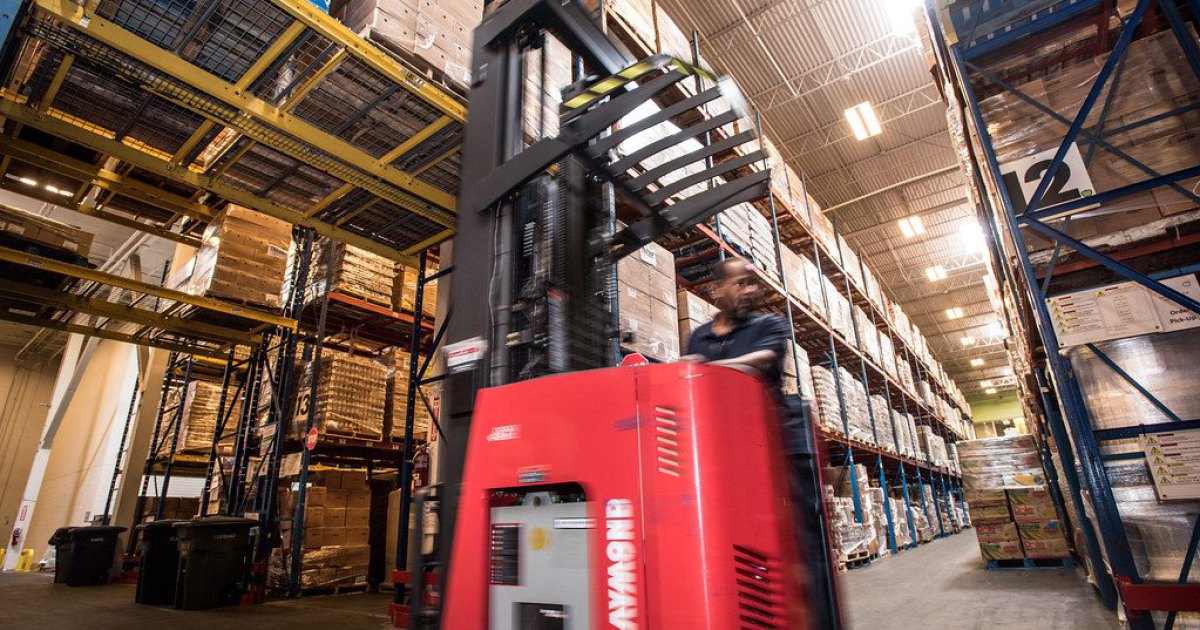
Featured photo: Photo: USDAgov · CC PDM 1.0 · Openverse (source)